


Manchester’s Fringe Festival continues to uncover theatrical gems, and The Boys We Were at the King’s Arms is one of them. This sharply observed comedy-drama packs an astonishing amount into just fifty minutes. Not a single minute is wasted as the audience is drawn into the bittersweet story of The Boiz—a once-popular boy band that enjoyed chart success and a devoted fan base before fading into obscurity and, ultimately, falling apart.
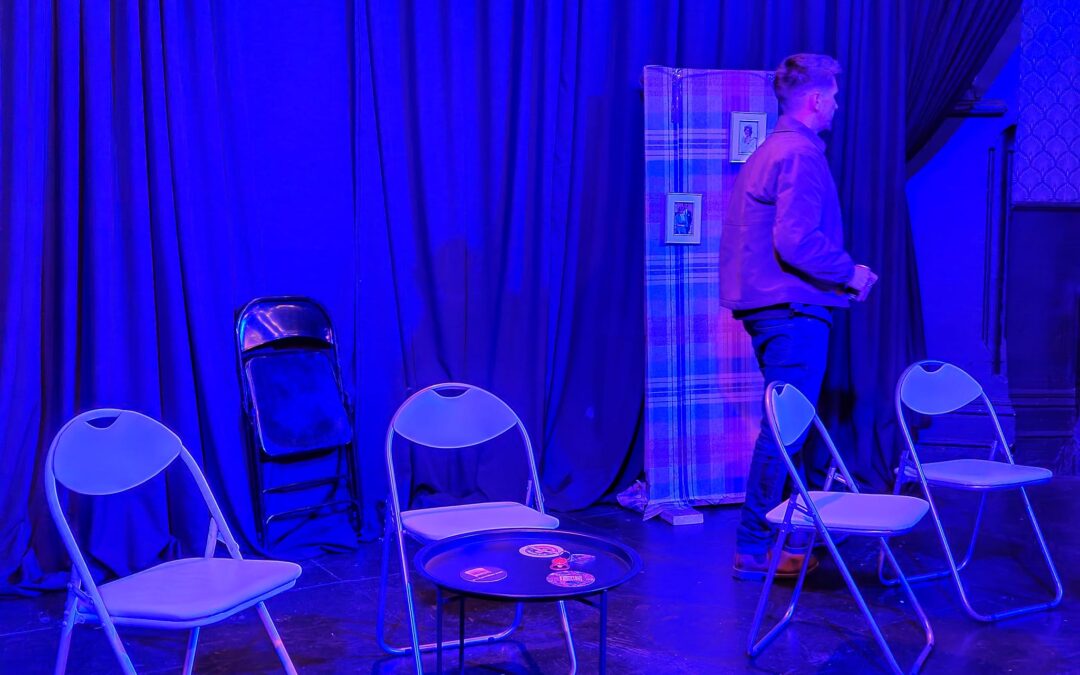
The staging perfectly suits the intimate setting of the King’s Arms. There is no curtain to rise or fall, no elaborate scenery to distract. Instead, a single set consisting of four chairs, two small tables and a meagre collation of booze, biscuits and sandwiches provides everything the actors need. It is wonderfully understated, allowing the performances and dialogue to take centre stage.
Years later, the former band members are summoned by their ever-optimistic manager, Max, who triumphantly announces that he has secured a lucrative contract for the group to reunite and tour once more. It is an irresistible premise, but the real question is not whether they can still sing—it is whether they can still stand each other.
The years have left their mark. Dreams have been replaced by ordinary lives, and youthful ambition has given way to aching backs, family responsibilities and the quiet compromises that adulthood demands. Yet one thing remains reassuringly unchanged: the rivalry and bickering that once threatened to destroy the band in the first place.
Bill Doherty gives Ry an infectious immaturity, portraying a man who seems determined never to grow up. Bob Peters brings genuine poignancy to Jay, whose revelation that he is terminally ill adds an unexpected emotional depth to the production. Thomas Peters is excellent as Lee, while Patrick Jeffries steals more than a few laughs as Daz, whose unforgettable attempt to lick the cream from an entire packet of Custard Cream biscuits before constructing a pyramid from the empty biscuits is comedy at its most gloriously absurd. Add to that his two-stone weight gain, chronic back injury and contented family life, and you have a wonderfully realised character.
Special praise must go to John Joyce-O’Keefe as Max. His commanding stage presence and unwavering belief that The Boiz can reclaim their glory are delivered with such persuasive passion that you almost find yourself believing the impossible alongside him. His performance provides the emotional heartbeat of the play, balancing delusion, determination and genuine affection for the men he once managed.
The chemistry between the five actors is superb. Every exchange feels authentic, every joke lands naturally, and the emotional moments are earned rather than manufactured. It is little surprise that the well-attended, predominantly male audience responded with laughter, warmth and recognition throughout.
Beneath its humour lies a thoughtful question that lingers long after the actors take their bows: What happens when the thing that defines you is over? Who are you when ordinary life leaves its mark? It is a question that resonates far beyond the world of manufactured pop groups.
The Boys We Were is funny, touching, nostalgic and surprisingly profound. It reminds us that while youth may fade and fame may disappear, friendship, regret, hope and the search for identity remain timeless. An engaging and thoroughly entertaining Fringe production that deserves every full house it attracts.
We also saved money at the bar with our Canal St Card/app
Review by Peter Johnson for Canal St Media